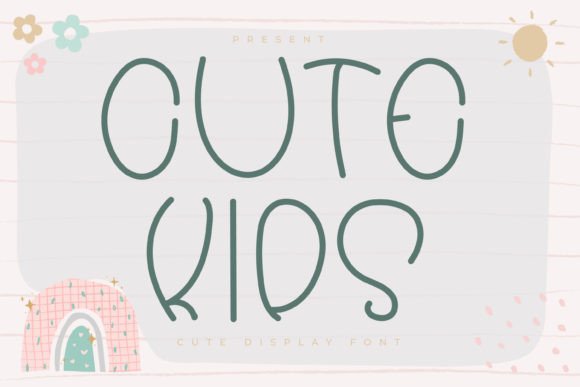
Integrating Cute Kids: A Practical Guide to Using This Playful Display Font in Professional Workflows
In the realm of graphic design and visual communication, typography is rarely just about legibility. It is a strategic tool that sets the tone, establishes brand personality, and guides the viewer’s emotional response. For professionals working within the education, childcare, family entertainment, or juvenile product sectors, selecting the right typeface is a critical decision that impacts user engagement and brand perception. Cute Kids emerges as a specialized solution in this niche, offering a playful and cute display font that embodies trendiness and authenticity. However, simply downloading a font is not enough; understanding how to integrate it effectively into your broader design workflow is what separates amateur projects from polished, professional outcomes.
This article explores the practical application of Cute Kids, moving beyond aesthetic appreciation to discuss its role in project planning, execution, and long-term brand consistency. Whether you are a marketer launching a new campaign for a school project, an entrepreneur designing packaging for children’s goods, or an educator creating learning materials, this guide will help you leverage this asset efficiently.
Understanding the Asset: Where Cute Kids Fits in Your Design Stack
Before implementing any typographic element, it is essential to understand its specific characteristics and limitations. Cute Kids is classified as a display font. This distinction is crucial for workflow planning. Display fonts are designed for large sizes, headlines, and short bursts of text rather than body copy. They possess unique stylistic quirks—rounded edges, irregular baselines, and whimsical proportions—that capture attention but can reduce readability at smaller scales.
When auditing your current design resources, consider Cute Kids as a high-impact accent tool. It is not a replacement for your primary sans-serif or serif workhorses used for paragraphs and detailed information. Instead, it serves as the visual hook. In a typical project hierarchy, this font should be reserved for:
- Main headers and titles on posters or flyers.
- Short call-to-action buttons in digital interfaces.
- Logos or wordmarks for brands targeting younger demographics.
- Emphasis words within otherwise neutral layouts.
Recognizing this role early in the planning phase prevents common pitfalls, such as overusing the font in dense text blocks, which can cause visual fatigue and hinder information retention. By defining its scope upfront, you ensure that Cute Kids enhances clarity rather than complicating it.
Pre-Production: Preparation and Compatibility Checks
Successful integration begins before you open your design software. The first step in your workflow should be verifying technical compatibility. Ensure that the font file format (typically OTF or TTF) is supported by your primary tools, such as Adobe Illustrator, Photoshop, Canva, or web development environments. If you are working in a collaborative environment, confirm that all team members have access to the font license to avoid substitution issues during file sharing.
Another critical pre-production task is pairing strategy. Because Cute Kids is highly stylized, it requires a neutral counterpart to maintain balance. Select a clean, highly legible sans-serif font to handle body text. This contrast creates a professional hierarchy where the playful nature of the display font stands out without overwhelming the viewer. Document these pairings in your brand guidelines or project briefs to ensure consistency across different creators and platforms.
Additionally, consider the color palette during this phase. Playful fonts often interact dynamically with bright, saturated colors. Test how Cute Kids renders against various backgrounds. Does it maintain integrity on dark modes? Is it visible when printed on textured paper? Addressing these variables early saves significant revision time later in the process.
Execution: Implementing Cute Kids in Real-World Projects
Once the groundwork is laid, the implementation phase focuses on applying the font to specific deliverables. Here is how Cute Kids can be utilized across different stages of common workflows:
Educational Materials and School Projects
For educators and instructional designers, engagement is key. When creating worksheets, presentation slides, or classroom decorations, use Cute Kids for section headers and activity titles. Its authentic, hand-drawn feel reduces the intimidation factor of academic content, making learning appear more approachable. However, maintain strict discipline regarding size. Keep the font above 24 points for print materials to ensure young readers can decipher the letters easily. Use it to highlight key vocabulary words, but rely on a standard font for instructions to prevent confusion.
Marketing and Brand Identity
Entrepreneurs and marketers in the family sector can leverage this font to convey warmth and trust. In social media graphics, use Cute Kids for quote overlays or promotional announcements. Its trendy aesthetic aligns well with current design preferences that favor authenticity over corporate stiffness. When designing packaging, apply the font to the product name or primary tagline. Ensure there is adequate white space around the text to let the playful shapes breathe. Crowding a display font diminishes its impact and can make the design look cluttered and unprofessional.
Digital Interfaces and Web Design
If you are incorporating Cute Kids into a website or app, technical performance is paramount. Convert the font to web-friendly formats like WOFF2 to optimize loading speeds. Use it sparingly in navigation menus or hero sections. Avoid using it for form labels or error messages, where clarity and speed of recognition are critical. Remember that screen rendering can sometimes soften the edges of complex display fonts, so always preview your designs on multiple devices to ensure the playful character remains intact.
Quality Control and Consistency Management
Maintaining quality over the lifecycle of a project requires regular audits. As your team produces more assets, deviations in usage can occur. Establish a simple checklist for reviewing any material that features Cute Kids:
- Hierarchy Check: Is the font used only for emphasis and headlines?
- Legibility Test: Can the text be read quickly from a standard distance?
- Pairing Harmony: Does the accompanying body font complement rather than compete with the display type?
- Color Contrast: Is there sufficient contrast between the text and background for accessibility compliance?
Consistency builds brand recognition. If Cute Kids is part of your brand identity, ensure it is applied uniformly across all touchpoints, from business cards to email newsletters. Inconsistencies, such as changing the tracking or kerning arbitrarily, can dilute the professional appearance of your work. Create template files with pre-set styles for this font to streamline production and minimize human error.
Long-Term Value and Workflow Efficiency
Investing time in mastering a specific asset like Cute Kids yields long-term efficiency gains. Once you understand its strengths and limitations, you can deploy it rapidly without extensive experimentation for each new project. Build a library of preset styles in your design software that include the optimal size, color, and spacing for this font. This allows you to focus on higher-level creative decisions rather than repetitive typographic adjustments.
Furthermore, staying updated on trends ensures that your use of the font remains relevant. While Cute Kids embodies current trendiness, design aesthetics evolve. Periodically review how your audience responds to materials featuring this font. Gather feedback from users, clients, or students. If engagement drops, consider refreshing your layout strategies while keeping the core typographic asset. This adaptive approach ensures that your use of the font remains effective and aligned with user expectations.
In conclusion, Cute Kids is more than just a decorative element; it is a functional tool that, when integrated thoughtfully, enhances communication and brand appeal. By approaching its use with a structured workflow—focusing on preparation, strategic pairing, disciplined execution, and rigorous quality control—you can maximize its potential. Whether you are designing for a school project or launching a commercial product, this playful display font offers a pathway to authentic, engaging, and professional results. Treat it with the same strategic consideration as any other critical business asset, and it will serve your creative goals effectively for years to come.