Children Playing: A Practical Look at a Handwritten Typeface for Creative Projects
In the crowded landscape of digital typography, finding a font that balances personality with legibility is a common challenge for designers and content creators. Children Playing emerges as a distinct option in this space, offering a handwritten aesthetic that leans heavily into charm and informality. Unlike rigid serif or sans-serif typefaces designed for corporate reports, this font is built for emotional connection. It mimics the organic flow of human handwriting, providing a visual texture that feels personal rather than manufactured. For professionals who need to inject warmth into their designs without sacrificing clarity, understanding the specific utility of Children Playing is essential.
The Aesthetic Profile and Design Intent
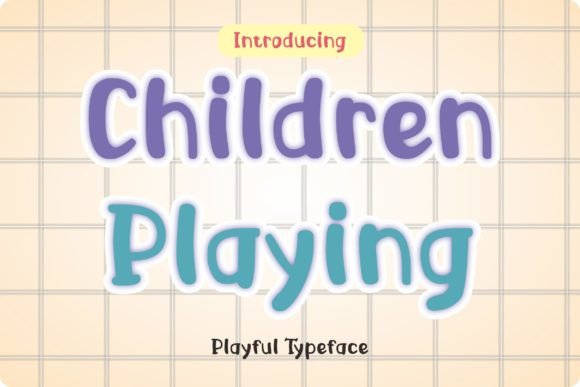
The primary characteristic of Children Playing is its playful irregularity. The glyphs are crafted to resemble natural pen strokes, complete with slight variations in baseline alignment and letter spacing. This is not a flaw but a deliberate design choice intended to evoke nostalgia and innocence. The font achieves a unique blend of cuteness and beauty, avoiding the overly cartoonish pitfalls that plague many novelty typefaces. Instead, it maintains a level of elegance that allows it to function in more sophisticated contexts, such as wedding invitations or high-end boutique branding, where a touch of whimsy is desired but professionalism must remain intact.
From a technical standpoint, the font’s open counters and rounded terminals contribute to its approachable feel. These features make it highly readable at larger sizes, which is crucial for its intended applications. When used for headlines or short phrases, the font commands attention through its friendly demeanor. However, its effectiveness relies on the designer’s ability to respect its limitations. It is not designed for dense body text; rather, it shines when given space to breathe, allowing each character’s unique shape to contribute to the overall composition.
Practical Applications in Event Design and Crafts
One of the strongest use cases for Children Playing is in the realm of event planning and personalized crafts. Events like birthdays, weddings, and baby showers thrive on atmosphere, and typography plays a significant role in setting the tone. This font adds a touch of personalization that standard system fonts cannot replicate. For instance, using it on place cards or welcome signs creates an immediate sense of intimacy, suggesting that the host has invested time and care into the details.
- Birthday Celebrations: The cheerful feel of the font aligns perfectly with the joyous nature of birthday parties. It works exceptionally well on banners, cupcake toppers, and invitation headers.
- Weddings: While traditional weddings often favor calligraphy, modern or rustic weddings benefit from the relaxed elegance of Children Playing. It pairs well with floral motifs and soft color palettes.
- Souvenirs and Favors: Small items like gift tags, jar labels, or thank-you notes gain significant visual appeal when labeled with this font. It transforms generic objects into memorable keepsakes.
The font’s ability to elegantly spell out quotes also makes it a favorite for social media graphics and printed posters. In an era where visual content drives engagement, a quote rendered in a genuine-looking handwritten style often performs better than one set in sterile geometric fonts. It stops the scroll by offering a moment of human connection in a digital feed.
Usability for Small Business Owners and Marketers
For entrepreneurs and small business owners, brand differentiation is critical. Children Playing offers a tool for businesses that want to project a friendly, accessible, and creative image. This is particularly relevant for industries such as childcare, education, handmade goods, and pet services. A logo or packaging design utilizing this font can communicate values of care, creativity, and approachability before the customer even reads the product description.
Marketers should note that consistency is key when integrating such a distinctive typeface. Because Children Playing has a strong personality, it should be used sparingly to maintain its impact. Overuse can lead to visual fatigue and reduce readability. A best practice is to pair it with a neutral, clean sans-serif font for supporting text. This contrast ensures that the headline grabs attention while the body copy remains easy to digest. This combination creates a balanced hierarchy that guides the viewer’s eye effectively.
Enhancing Greeting Cards and Personal Correspondence
In the niche of greeting card design, the demand for intimate, handwritten touches remains high. Digital printing has made it possible to produce cards that look hand-lettered, and Children Playing is well-suited for this purpose. It gives an intimate handwritten touch that resonates with recipients who value sincerity. Whether for holidays, anniversaries, or simple "thinking of you" notes, the font helps bridge the gap between mass production and personal sentiment.
Freelance designers working on custom card lines will find that this font reduces the time needed for manual lettering while still achieving a bespoke look. It allows for rapid prototyping of designs, enabling creators to test different layouts and messages efficiently. The flexibility of the font means it can adapt to various card sizes and orientations without losing its characteristic charm.
Evaluating Quality and Long-Term Value
When assessing the long-term value of a typeface, reliability and versatility are paramount. Children Playing demonstrates consistent quality across different mediums. Whether printed on textured paper for a craft project or displayed on a high-resolution screen for a digital advertisement, the font retains its clarity and aesthetic appeal. Its vector-based construction ensures that it scales without pixelation, making it suitable for both small stickers and large banners.
However, users must be aware of its limitations. As a display font, it is not suitable for long-form reading. Attempting to use it for paragraphs of text will result in poor legibility and a cluttered appearance. Additionally, because it mimics handwriting, it may not be appropriate for formal legal documents, corporate annual reports, or any context requiring strict authority and neutrality. Understanding these boundaries is crucial for professional application.
The font’s charm gives a cheerful feel to souvenirs and creative assets, but its true value lies in its ability to evoke emotion. In marketing psychology, emotional resonance drives decision-making. By using a font that feels human and warm, creators can subtly influence how their audience perceives their message. Children Playing makes your creativity funny, lighthearted, and engaging, which can be a powerful asset in cutting through the noise of modern advertising.
Who Should Consider This Font?
This typeface is ideal for a specific subset of creators:
- Crafters and DIY Enthusiasts: Those who create physical goods like scrapbooks, planners, or home decor will find the font easy to integrate into their workflows.
- Event Planners: Professionals who need to create cohesive visual identities for temporary events will appreciate the font’s thematic flexibility.
- Educators and Childcare Providers: The font’s name and style are naturally aligned with materials designed for children, making it a safe and appealing choice for educational resources.
- Boutique Brand Owners: Small businesses selling artisanal products can use the font to reinforce their brand story of craftsmanship and care.
For these groups, Children Playing is not just a decorative element but a functional tool that enhances communication. It simplifies the process of adding a personal touch to digital and physical projects, saving time while elevating the final output.
Final Thoughts on Integration
Incorporating Children Playing into your design toolkit requires a thoughtful approach. It is a specialized instrument, not a universal solution. When used with intention, it brings life to static designs and adds a layer of emotional depth that purely functional fonts lack. Its unique blend of cuteness and beauty makes it a standout choice for projects that prioritize connection and joy.
Ultimately, the decision to use this font should be driven by the specific goals of your project. If your objective is to create a warm, inviting, and memorable experience for your audience, Children Playing delivers on that promise. It stands as a testament to the power of typography to convey tone and emotion, proving that even in a digital age, the human touch remains invaluable. Expect your gifts and creations to stand out, not because of loud colors or complex graphics, but because of the genuine, cheerful spirit that this font embodies.